Osaka
Japan's Kitchen. A neon-lit city famous for street food, comedy, and outgoing locals.


Quick Facts: Osaka in April
- Cheapest fare
- ฿6,549
- Cheapest month
- August
- Airlines
- 2 carriers
- Flight time
- ~5h 55m
- Non-stop
- Direct flights available
- Avg temperature
- 15°C
- Climate
- Mild
- Cost of living
- Moderate
- Distance
- 0 km
Japan's Kitchen. A neon-lit city famous for street food, comedy, and outgoing locals.
Best April Deals
April Price Intelligence
How Osaka prices compare in April 2026
Best in April
฿6,549
April avg
฿8,115
April median
฿6,549
April p90
฿11,095
Daily Price Trend
Cheapest fares for each day of April 2026
About Osaka
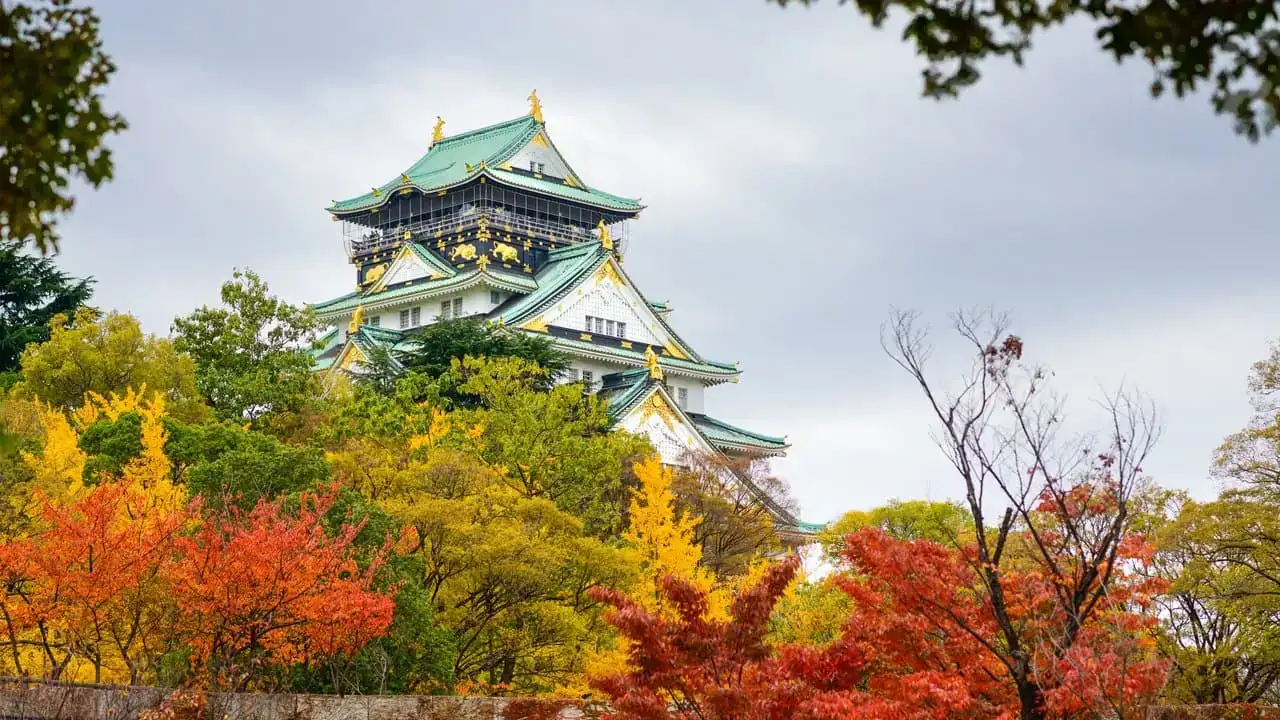
Osaka is Japan's third-largest city and is famous for its outgoing people, neon lights, and incredible food culture. Start your exploration at Osaka Castle, a magnificent reconstruction surrounded by a giant park and impressive moats. In the evening, head straight to Dotonbori. This area is the neon heart of the city, dominated by the famous Glico Running Man sign and giant mechanical crab statues. It’s a sensory overload of sights, sounds, and smells that perfectly represents Osaka's high-energy 'Kuidaore' (eat until you drop) philosophy. For a touch of traditional Osaka, visit Sumiyoshi Taisha, one of the country's oldest shrines, known for its beautiful arched bridge. Families will love the Osaka Aquarium Kaiyukan, one of the largest in the world, featuring a massive tank with a whale shark. Shinsekai is another must-visit neighborhood; built in the early 20th century, it has a retro, nostalgic feel with the Tsutenkaku Tower at its center. Osaka lacks the formal reserve of Tokyo, making it a place where you can easily strike up a conversation with locals and experience a different side of Japanese hospitality.
They don't call Osaka 'Japan's Kitchen' for nothing. The city is the birthplace of Takoyaki (octopus balls) and Okonomiyaki (savory pancakes). Dotonbori is the best place to find Takoyaki stands—look for the longest queue for the best molten-hot experience. Okonomiyaki is often cooked on a hot griddle right in front of you; the 'Osaka-style' mixes all the ingredients together before grilling. Another local favorite is Kushikatsu—deep-fried skewers of meat, seafood, and vegetables. Just remember the golden rule: no double-dipping in the communal sauce! For a fresh seafood experience, visit Kuromon Ichiba Market, often called 'Osaka's Kitchen.' Here you can sample everything from grilled scallops and sea urchin to wagyu beef skewers and seasonal fruits. If you're looking for something sweet, try the 'Rikuro-ojisan' cheesecake—famous for its fluffiness and the jingle of a bell when a fresh batch is ready. Osaka's food culture is about approachability and abundance. Whether it's a high-end sushi bar or a tiny izakaya in an alleyway, you're almost guaranteed a delicious and memorable meal.
While Dotonbori is loud and bright, the nearby Hozenji Yokocho is a quiet, stone-paved alleyway that feels like it’s frozen in time. It leads to the Hozenji Temple, where visitors splash water on a moss-covered Fudo Myoo statue for good luck. For a modern hidden gem, head to the Umeda Sky Building at night. The 'Floating Garden Observatory' provides a stunning 360-degree view of the city, and the rooftop has a glowing path that’s perfect for photography. It's often less crowded than Tokyo's observatories. the neighborhood of Amerikamura (Amemura) is Osaka’s answer to Tokyo’s Harajuku, filled with vintage clothing stores, quirky cafes, and youth culture. For art lovers, the National Museum of Art, Osaka, is situated underground on Nakanoshima island, featuring a striking titanium structure above ground. Another local secret is the Tenjinbashi-suji Shopping Arcade, the longest in Japan. Walking its 2.6 kilometers gives you a real sense of daily life in Osaka, far away from the main tourist hubs, filled with traditional tea shops, knife stores, and local snack vendors.
The Osaka Metro is the most efficient way to get around, with the Midosuji Line (red line) connecting the major hubs of Umeda (North) and Namba (South). If you plan to visit nearby Kyoto, Nara, or Kobe, the Kansai Thru Pass can be a great value as it covers almost all private trains, subways, and buses in the region. Unlike Tokyo, where people stand on the left of the escalator, in Osaka, the convention is to stand on the right. It’s a small detail, but it shows the city’s independent spirit! Most shops and restaurants accept credit cards, but smaller stalls in markets like Kuromon will still be cash-only, so always carry some Yen. Tipping is not practiced in Japan and can sometimes be seen as confusing or even rude; simply pay the amount on the bill. Many restaurants have English menus or plastic food displays that make ordering easy. Lastly, don't be afraid to use 'Arigatou' (thank you) and 'Oishii' (delicious)—Osakans are very friendly and will appreciate your enthusiasm for their city and its legendary food.