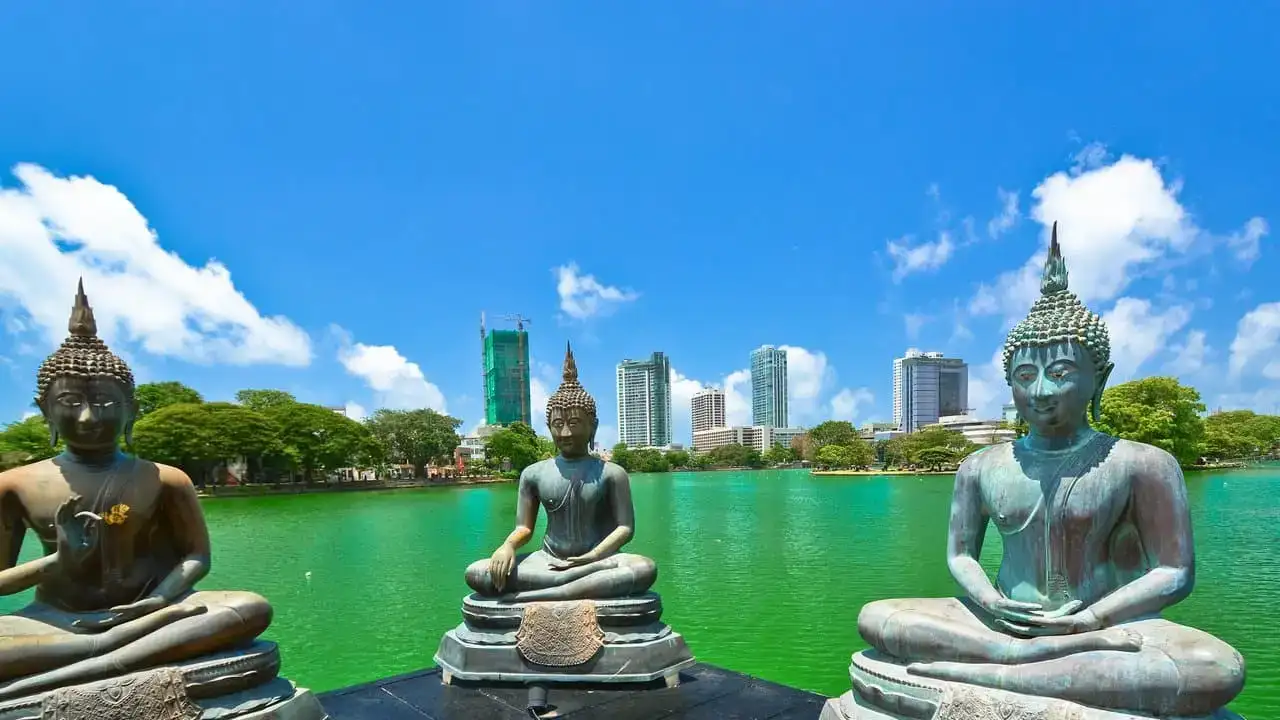
Colombo
Garden City of the East. A coastal capital mixing colonial charm with modern development.
Quick Facts: Colombo in February
- Cheapest fare
- ฿5,556
- Cheapest month
- May
- Airlines
- 1 carriers
- Flight time
- ~3h 20m
- Non-stop
- Direct flights available
- Avg temperature
- 28°C
- Climate
- Hot
- Cost of living
- Affordable
- Distance
- 0 km
Garden City of the East. A coastal capital mixing colonial charm with modern development.
Best February Deals
February Price Intelligence
How Colombo prices compare in February 2027
Best in February
฿5,556
February avg
฿5,926
February median
฿5,556
February p90
฿6,360
Daily Price Trend
Cheapest fares for each day of February 2027
About Colombo
Colombo, the capital of Sri Lanka, is a city that has undergone a dramatic transformation in recent years, evolving from a colonial port into a modern, cosmopolitan hub while retaining its historic charm. Start your exploration at Galle Face Green, a large coastal park where locals gather at sunset to fly kites, play cricket, and enjoy street food. The promenade offers stunning views of the Indian Ocean and the rapidly growing skyline, including the iconic Lotus Tower. Nearby, the historic Galle Face Hotel provides a colonial-era contrast with its grand architecture and storied past. The Fort district is the city's commercial core, featuring a mix of modern offices and beautifully restored colonial buildings like the Old Dutch Hospital, which now houses trendy restaurants and boutiques. Just a short walk away is Pettah, the city's most vibrant and chaotic market district. Walking through its narrow streets, each dedicated to a different type of merchandise, is a sensory experience like no other. From the red and white brickwork of the Jami Ul-Alfar Mosque (Red Mosque) into the bustling crowds of sea street, Pettah is the true pulse of the city. Cultural sites abound in Colombo. The Gangaramaya Temple is a must-visit, offering a fascinating and eclectic mix of Sri Lankan, Thai, Indian, and Chinese architecture. It serves as a center for learning and community, and its museum houses an incredible collection of artifacts. For a more serene experience, visit the Seema Malaka shrine on Beira Lake, designed by the renowned architect Geoffrey Bawa. Whether you're exploring the wide boulevards of Cinnamon Gardens or the narrow alleys of Slave Island, Colombo is a city of layers, waiting to be discovered.
Colombo's food scene is an explosion of spices, reflecting the island's diverse heritage. The definitive Colombo street food is Kottu Roti. Watch (and listen) as vendors chop flatbread, vegetables, eggs, and meat on a hot metal griddle with rhythmic clashing of metal blades. The result is a savory, spicy, and incredibly satisfying dish. For breakfast or a light dinner, try 'Hoppers' (appa)—bowl-shaped pancakes made from fermented rice flour and coconut milk, often served with a fried egg in the center and a side of spicy 'lunu miris' (onion and chili sambal). Sri Lanka is famous for its seafood, and Colombo is the best place to sample it. The Ministry of Crab, located in the Old Dutch Hospital, is world-renowned for its massive lagoon crabs prepared with black pepper, chili, or garlic butter. For a more local experience, head to the seafood shacks along the beach in Mt. Lavinia or Dehiwala at sunset. Don't forget to try a traditional Sri Lankan rice and curry, which typically involves a central mound of rice surrounded by five or six different vegetable curries, dhal, and a meat or fish option, all flavored with coconut and aromatic spices. To satisfy your sweet tooth, try 'Watalappam,' a rich coconut custard pudding sweetened with jaggery (palm sugar) and spiced with cardamom and nutmeg. For a refreshing drink, nothing beats a golden 'Thambili' (King Coconut) from a roadside vendor. Colombo's cafe culture is also thriving, with many spots serving excellent local tea and coffee in stylish settings. From the high-end dining of the city's luxury hotels to the local 'kade' (small shops) serving spicy short eats, Colombo offers a delicious journey through the flavors of the Indian Ocean.
For fans of design, Colombo is synonymous with Geoffrey Bawa, the father of 'Tropical Modernism.' His influence is everywhere in the city, and visiting his former home and studio, No. 11, is a highlight for many. This meticulously designed space is a labyrinth of courtyards, light wells, and curated art, reflecting his philosophy of breaking down the barriers between indoor and outdoor spaces. It provides an intimate look at the life and vision of one of Asia's most influential architects of the 20th century. Another Bawa masterpiece to explore is the Seema Malaka on Beira Lake. This Buddhist shrine appears to float on the water and features a minimalist design that emphasizes peace and reflection amidst the urban chaos. Beyond Bawa, the city's colonial heritage is beautifully preserved in buildings like the National Museum of Colombo. This Italianate-style mansion houses a vast collection of Sri Lankan antiques, including the regalia of the Kandyan kings, set within the lush grounds of the Viharamahadevi Park, the city's largest green space. For a modern take on Sri Lankan design, visit the shops and galleries in Cinnamon Gardens (Colombo 07). Barefoot, founded by artist Barbara Sansoni, is a cultural institution offering hand-woven textiles, books, and art in a beautiful courtyard setting. Exploring these architectural and design-focused spots reveals a more sophisticated and artistic side of Colombo. It shows a city that values its heritage while constantly innovating and adapting its unique aesthetic to the tropical environment, making it one of the most visually interesting capitals in South Asia.
Colombo is a very affordable city to explore if you use local transport and eat like a resident. The iconic 'tuk-tuk' (three-wheeler) is the most convenient way to get around; just make sure to use those with functioning meters or agree on a price beforehand (though metered ones are usually better). For a truly cheap experience, the city's bus network is extensive and costs only a few cents per trip, though it can be crowded and confusing for first-timers. The train from Fort Station to Mt. Lavinia offers a scenic and very affordable coastal ride for just a few rupees. When it comes to food, stick to the local 'hotels' (which are actually small restaurants). These spots serve excellent rice and curry, kottu, and 'short eats' (savory snacks like samosas and rolls) for very low prices. Visiting public spaces like Galle Face Green, Viharamahadevi Park, and the Independence Memorial Hall costs nothing and provides a great way to experience the local atmosphere. In Pettah, window shopping is a free entertainment in itself, and you can find great deals on everything from electronics to spices if you're willing to bargain. For budget accommodation, consider staying in the Mt. Lavinia area, which offers beach access and lower prices than the city center, while still being easily accessible by train or bus. Look for guesthouses or 'homestays' for a more personal and affordable experience. Many smaller museums and temples have modest entrance fees or are free to visit (though a small donation is often appreciated). By focusing on local experiences and using the city's public transport, you can enjoy the rich culture and vibrant energy of Colombo without spending a lot of money.