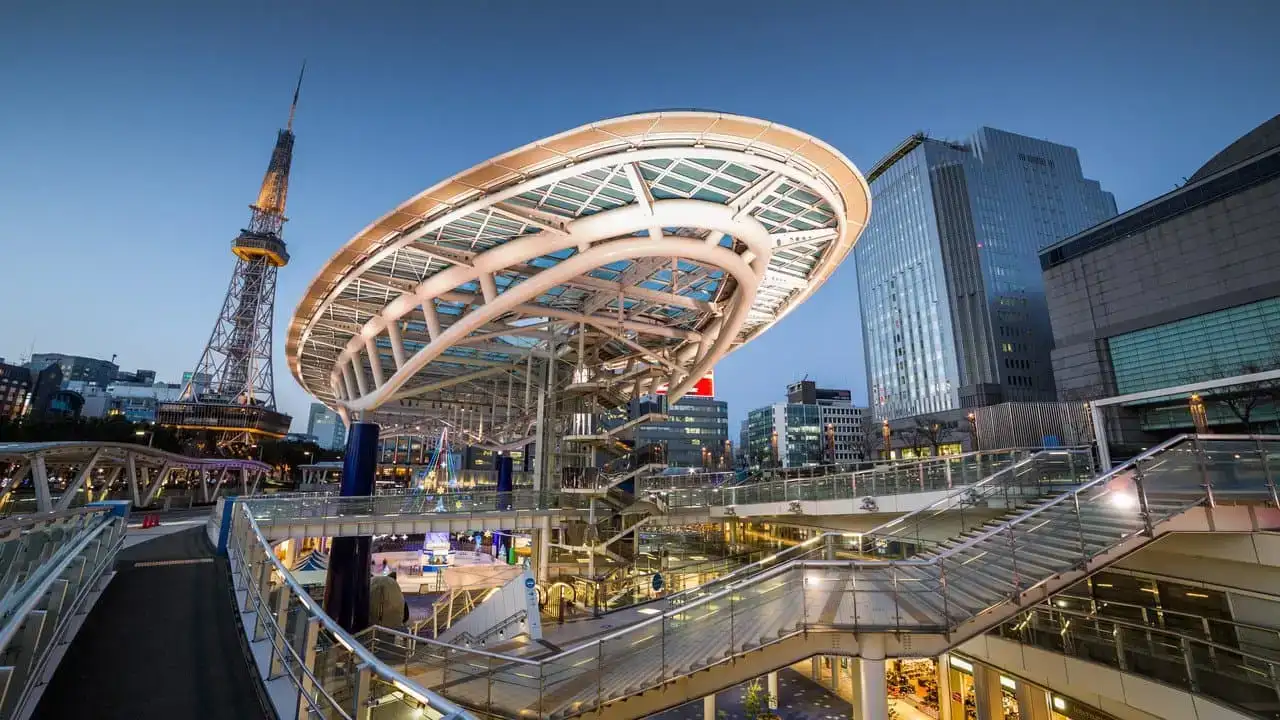
Nagoya
Japan's fourth-largest city and industrial powerhouse, Nagoya offers an impressive castle, the Toyota automobile museum, distinctive miso-based cuisine, and serves as a convenient gateway to the Japanese Alps and historic shrines.
Quick Facts: Nagoya in January
- Cheapest fare
- ฿6,040
- Cheapest month
- February
- Avg temperature
- 4°C
Japan's fourth-largest city and industrial powerhouse, Nagoya offers an impressive castle, the Toyota automobile museum, distinctive miso-based cuisine, and serves as a convenient gateway to the Japanese Alps and historic shrines.
January Price Intelligence
How Nagoya prices compare in January 2027
Best in January
฿6,040
January avg
฿8,211
January median
฿6,361
January p90
฿10,405
Daily Price Trend
Cheapest fares for each day of January 2027
January 2027 Price Calendar
Tap any day to jump to that deal
About Nagoya
Nagoya Castle stands as the city's defining landmark and one of Japan's most important historical fortifications. Originally built in 1612 by Tokugawa Ieyasu, the shogun who unified Japan, the castle was tragically destroyed in World War II air raids but has been meticulously rebuilt, with the stunning Hommaru Palace — a faithful reconstruction using traditional materials and techniques — now open to visitors in its full gilded splendor. The palace's painted sliding doors, coffered ceilings, and audience halls offer an extraordinary glimpse into the aesthetic refinement of the Edo period samurai elite. The castle's iconic golden shachihoko (dolphin-fish) roof ornaments are symbols of the city itself. Near the castle grounds, the Tokugawa Art Museum houses one of Japan's finest collections of samurai artifacts, including swords, armor, Noh theater costumes, and a national treasure scroll of The Tale of Genji. South of the city center, Atsuta Shrine is one of Shinto's most sacred sites, believed to house the legendary Kusanagi no Tsurugi — one of three Imperial Regalia of Japan. The shrine's ancient cypress forest provides a meditative contrast to the urban surroundings. For a more contemporary cultural experience, the Osu Kannon district surrounding a historic Buddhist temple has evolved into one of Nagoya's most vibrant neighborhoods, blending traditional temple culture with anime shops, vintage clothing stores, street food stalls, and a lively covered shopping arcade that buzzes with energy on weekends. Nagoya's cultural landscape may be less famous than Kyoto's, but for those willing to explore, it offers rich rewards with far fewer crowds.
One of Nagoya's greatest strengths for travelers is its strategic location at the heart of Japan's main island, Honshu, making it an unrivaled base for day trips to some of the country's most celebrated destinations. The Ise Grand Shrine, Shinto's holiest site and home to the Sun Goddess Amaterasu, lies just 90 minutes south by limited express train. The shrine complex, set within a vast primeval forest, is rebuilt every 20 years in an unbroken tradition stretching back nearly 2,000 years, and the nearby Okage Yokocho street recreates an Edo-period pilgrimage town with excellent food shops. To the north, the mountain town of Takayama is reachable in about two hours by limited express and transports visitors into a beautifully preserved Edo-era merchant district of dark wooden lattice houses, sake breweries, and morning markets selling Hida beef skewers and handcrafted woodwork. Nearby Shirakawa-go, a UNESCO World Heritage village, features dramatic gasshō-zukuri farmhouses with steep thatched roofs designed to shed heavy Chubu mountain snow. The SCMAGLEV and Railway Park, located near the port area of Nagoya, is a must-visit for train enthusiasts and families, showcasing dozens of retired bullet trains and a maglev simulator that mimics speeds of 500 km/h. Legoland Japan, also near the port, provides a full day of family entertainment with rides, building workshops, and themed areas. Whether your interests lean toward ancient spirituality, alpine villages, cutting-edge engineering, or family fun, Nagoya provides remarkably efficient access to an astonishing range of central Japan experiences, all within a comfortable day's journey using the excellent Japanese rail network.