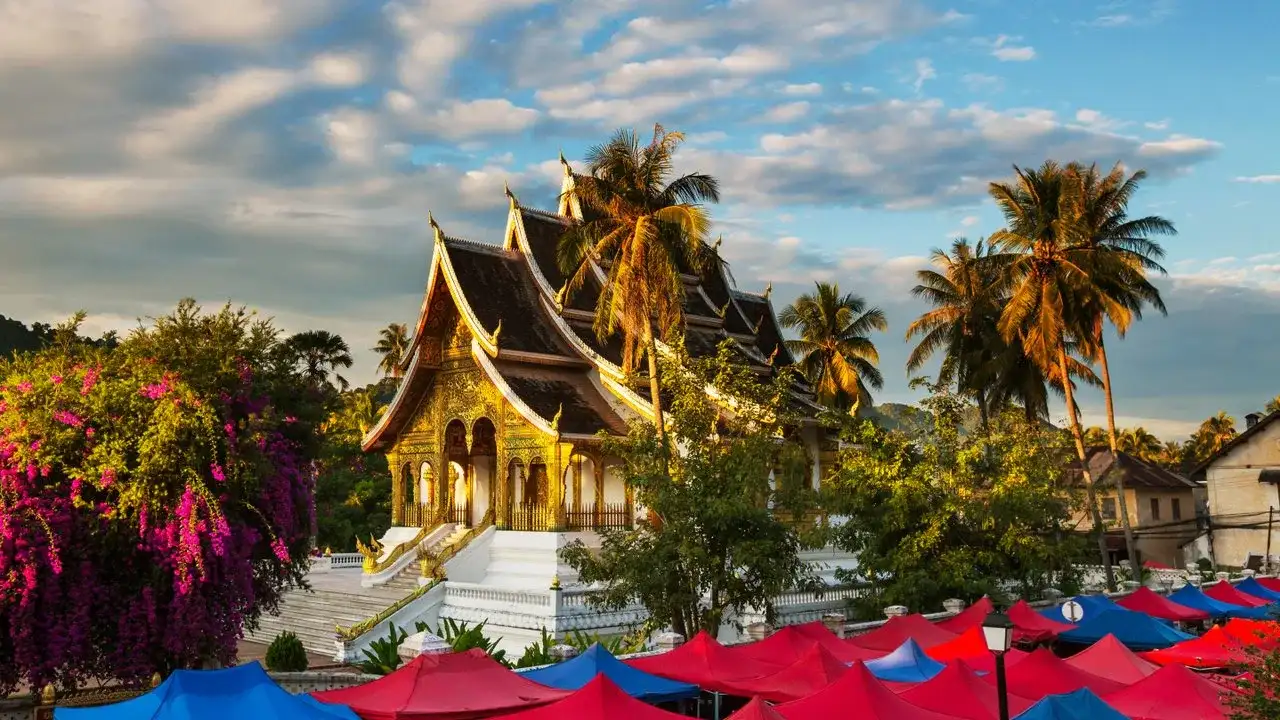
Luang Prabang
Soul of Laos. A UNESCO heritage town of saffron-robed monks, gilded temples, and French heritage.
Quick Facts: Luang Prabang in January
- Cheapest fare
- ฿3,484
- Cheapest month
- June
- Avg temperature
- 20°C
- Cost of living
- Affordable
Soul of Laos. A UNESCO heritage town of saffron-robed monks, gilded temples, and French heritage.
January Price Intelligence
How Luang Prabang prices compare in January 2027
Best in January
฿3,484
January avg
฿3,955
January median
฿3,502
January p90
฿4,863
Daily Price Trend
Cheapest fares for each day of January 2027
January 2027 Price Calendar
Tap any day to jump to that deal
About Luang Prabang
Luang Prabang is the spiritual heart of Laos, a town where the pace of life is dictated by ancient traditions and the saffron robes of monks. The daily alms-giving ceremony (Tak Bat) is a silent, sacred ritual that takes place at dawn, as hundreds of monks walk through the streets to receive offerings from locals. It is a profound experience that sets a respectful and meditative tone for the day. The town is home to dozens of stunning temples, most notably Wat Xieng Thong with its sweeping roofs and intricate 'tree of life' mosaic. The blend of traditional Lao architecture and 19th-century French colonial buildings has earned the entire town UNESCO World Heritage status. Spend your mornings wandering from temple to temple, listening to the soft chanting and smelling the incense that lingers in the humid air.
Beyond the town’s quiet streets lies a landscape of incredible natural beauty. A visit to Kuang Si Falls is essential; these multi-tiered turquoise pools are tucked away in the jungle and offer a refreshing place to swim. Nearby, the Tat Kuang Si Bear Rescue Centre provides a glimpse into conservation efforts for the local sun bears. The journey to the falls through rural villages is just as scenic as the destination itself. The Mekong River is the lifeblood of Luang Prabang. Taking a slow boat cruise at sunset is the perfect way to see the town from a different perspective and watch the local fishermen at work. Many travelers also take a river trip to the Pak Ou Caves, where thousands of Buddha statues have been deposited by pilgrims over centuries. The river and its surrounding jungle define the adventurous yet peaceful spirit of this region.
Lao cuisine is fresh, vibrant, and often centered around the staple of sticky rice, which is traditionally eaten with the hands. The Luang Prabang Night Market is the best place to jump into the local food scene. Here, you can find the 'buffet street' where a small fee gets you a bowl to fill with various vegetarian dishes, or you can try grilled Mekong river fish and spicy 'laap' (minced meat salad). For a more formal introduction to the flavors, participating in a Lao cooking class is a popular activity. You’ll learn about the use of lemongrass, galangal, and kaffir lime, and how to make the famous 'jeow bong' (sweet and spicy chili paste). Mornings are best spent at the wet market, where you can see the incredible variety of local produce, from fresh herbs to honeycomb and river weed, giving you a true sense of the local diet.
Luang Prabang is a destination that demands you slow down. There are no massive malls or high-speed transit systems; instead, there are bicycles and quiet walks along the riverbank. Many visitors find joy in 'doing nothing'—spending an afternoon in a riverside cafe with a Lao coffee, watching the slow flow of the Mekong. The town’s heritage hotels, often converted colonial villas, offer a sense of timeless luxury and tranquility. Cultural preservation is key here, and you can engage with it through traditional crafts. Visit Ock Pop Tok to learn about silk weaving and natural dyes, or watch local silversmiths at work. To cap off a relaxing day, climb the 300-plus steps of Mount Phousi in the center of town. While it’s the most popular spot for sunset, the 360-degree view of the town, the surrounding mountains, and the rivers is a beautiful reminder of why this remote corner of Laos is so cherished.