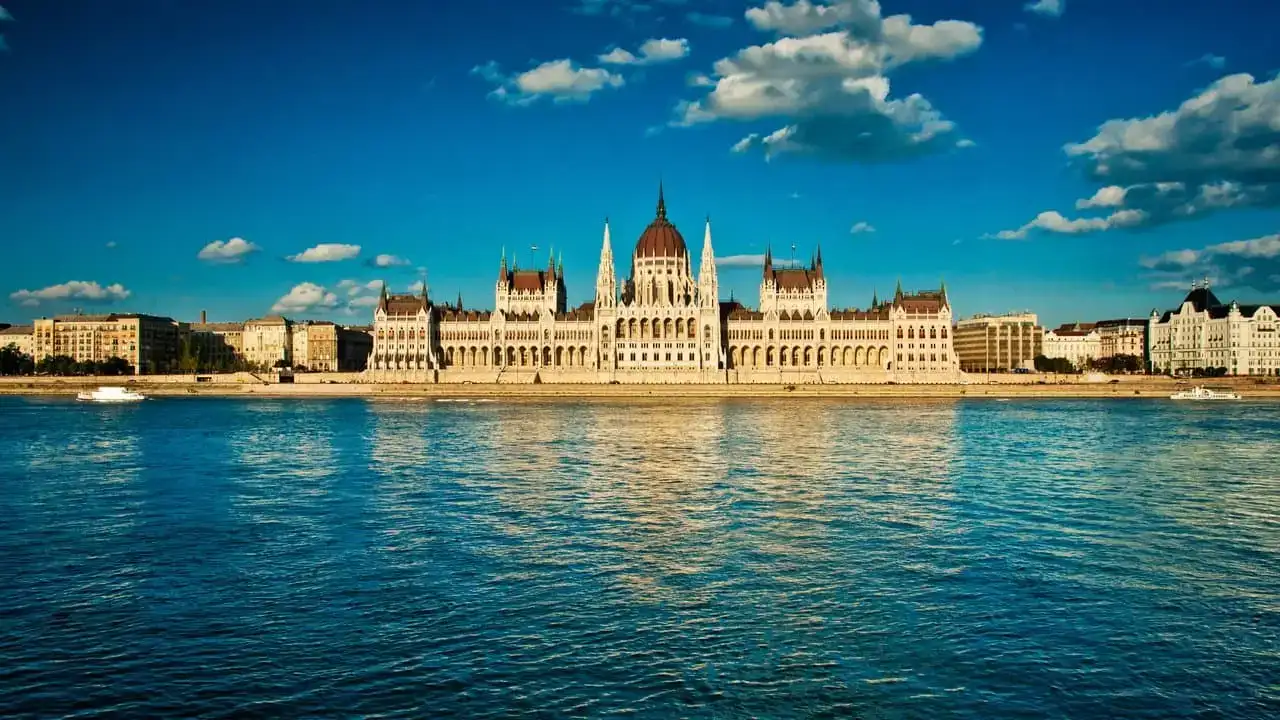
Budapest
Queen of the Danube. Grand architecture, thermal baths, and ruin bars define this dual city.
Quick Facts: Budapest in January
- Cheapest fare
- ฿17,539
- Cheapest month
- October
- Avg temperature
- 0°C
- Cost of living
- Affordable
Queen of the Danube. Grand architecture, thermal baths, and ruin bars define this dual city.
January Price Intelligence
How Budapest prices compare in January 2027
Best in January
฿17,539
January avg
฿19,855
January median
฿17,539
January p90
฿23,643
Daily Price Trend
Cheapest fares for each day of January 2027
January 2027 Price Calendar
Tap any day to jump to that deal
About Budapest
Budapest, the capital of Hungary, is a city divided by the mighty Danube River, with hilly Buda on one side and flat, bustling Pest on the other. Connected by the iconic Chain Bridge, the two sides offer vastly different experiences. In Buda, you'll find the historic Castle Hill, home to the Buda Castle, Matthias Church, and the Fisherman’s Bastion. The latter offers some of the most fairytale-like views of the city, particularly looking across the river at the Hungarian Parliament Building, a Gothic Revival masterpiece that dominates the skyline. Crossing over to Pest, the energy shifts to wide boulevards, grand 19th-century architecture, and a vibrant cultural scene. St. Stephen's Basilica is a focal point, as is the Great Synagogue on Dohány Street, the largest in Europe. The city's history is visible everywhere, from the somber 'Shoes on the Danube Bank' memorial, which honors Jews who were killed during WWII, to the grand House of Terror museum on Andrássy Avenue, which chronicles the city's experience under both fascist and communist regimes. Budapest is also known as the 'City of Spas,' built on a network of thermal springs. Visiting a bathhouse is an essential part of the local culture. The Széchenyi Baths in the City Park are famous for their outdoor pools where locals play chess in the steam, while the Gellért Baths are prized for their stunning Art Nouveau architecture. Whether you're soaking in medicinal waters or cruising down the Danube at night when the city is brilliantly illuminated, Budapest captivates with its blend of imperial grandeur and resilient spirit.
Budapest's culinary and nightlife scene is one of the most unique in Europe, centered around the famous 'Ruin Bars.' These bars, like Simsba Kert, are located in the courtyards of abandoned buildings in the old Jewish Quarter (District VII). Decorated with eclectic, salvaged furniture and quirky art, they offer a bohemian atmosphere that has become the city's signature. By day, they often host community markets and film screenings; by night, they transform into bustling hubs for locals and travelers to enjoy affordable drinks and live music. On the plate, Hungarian cuisine is hearty, flavorful, and often centered around paprika. Goulash (Gulyás) is the national dish, but it's traditionally a soup rather than a thick stew. Be sure to try Pörkölt (meat stew), Chicken Paprikash, and Lángos—a deep-fried dough traditionally topped with garlic, sour cream, and cheese. For a sweet treat, the Chimney Cake (Kürtőskalács) is a popular street food, while the elegant Gerbeaud Cafe offers a more formal setting to sample Dobos Torte, a multi-layered sponge cake with chocolate buttercream and caramel. For a more structured food experience, head to the Great Market Hall (Nagyvásárcsarnok). This massive neo-Gothic building is filled with stalls selling everything from fresh produce and meats to Hungarian lace and souvenirs. Head to the upper floor to find affordable food stalls serving authentic local dishes. Budapest also has a burgeoning craft beer scene and a long-standing wine tradition, particularly the sweet Tokaji and the robust Bull's Blood (Egri Bikavér). From casual street eats to Michelin-starred dining, the city's food scene is as diverse as its history.
While the main sights are stunning, Budapest has many hidden corners that offer a more intimate look at the city. Visit the Kerepesi Cemetery, one of the most beautiful and historic graveyards in Europe. It's the final resting place of many Hungarian luminaries and features incredible funerary art and monuments set within a peaceful, park-like atmosphere. It’s a place of quiet reflection that tells the story of the nation through its heroes and poets. Another fascinating spot is the Hospital in the Rock, a former secret nuclear bunker and emergency hospital located in the caverns beneath Buda Castle. For a touch of nature and a great view, climb Gellért Hill. While many stop at the Citadella, follow the winding paths to find smaller overlooks and the Cave Church, a unique chapel built into the rock. Across the river, Margaret Island (Margit-sziget) provides a green escape in the middle of the Danube. It features a musical fountain, ruins of a medieval convent, and a Japanese garden. It’s where locals go to jog, picnic, and escape the urban noise, offering a serene atmosphere just minutes from the busy center. Finally, explore the Wekerle Estate in District XIX. This unique 'garden city' within the city was built in the early 20th century with a distinct Transylvanian-influenced architectural style. Its central square and charming houses feel like a village from another era. It’s a testament to the city's architectural diversity and a great example of early urban planning inspired by the Arts and Crafts movement. These hidden gems reveal the layers of Budapest that most tourists miss, making for a much richer travel experience.
Budapest is famously one of the most affordable capitals in Europe, making it a favorite for budget travelers. To save on transport, consider purchasing a 24-hour or 72-hour travel card, which gives you unlimited access to the city's efficient network of trams, buses, and the metro. The yellow Metro Line 1 is the oldest underground railway in continental Europe and is a charming sight in itself. For a scenic and cheap tour, take Tram No. 2, which runs along the Pest side of the Danube, passing the Parliament and offering great views of Buda for the price of a standard ticket. When it comes to dining, look for 'Napi Menü' (daily menus) offered by many restaurants during lunch hours. These are usually two or three-course meals at a fraction of the evening price. The various 'étkezde' (traditional canteens) around the city serve hearty Hungarian home-style cooking at very low prices. For breakfast or a snack, the local bakeries offer delicious pastries like 'pogácsa' (savory scones) for just a few cents. Avoiding the restaurants directly on Váci Street or around the main castle area can also save you a significant amount of money. Many of Budapest's best attractions are free. You can wander through Buda Castle's courtyards, walk along the Danube promenade, and explore the Jewish Quarter's street art without spending anything. While the interior of the Parliament requires a paid tour, the exterior and the surrounding Kossuth Square are free to visit. For those who want to experience the thermal baths on a budget, some smaller, less famous baths like Veli Bej or Dandár offer lower entry fees than the big name sites. With a bit of planning, you can live like royalty in Budapest on a backpacker's budget.